
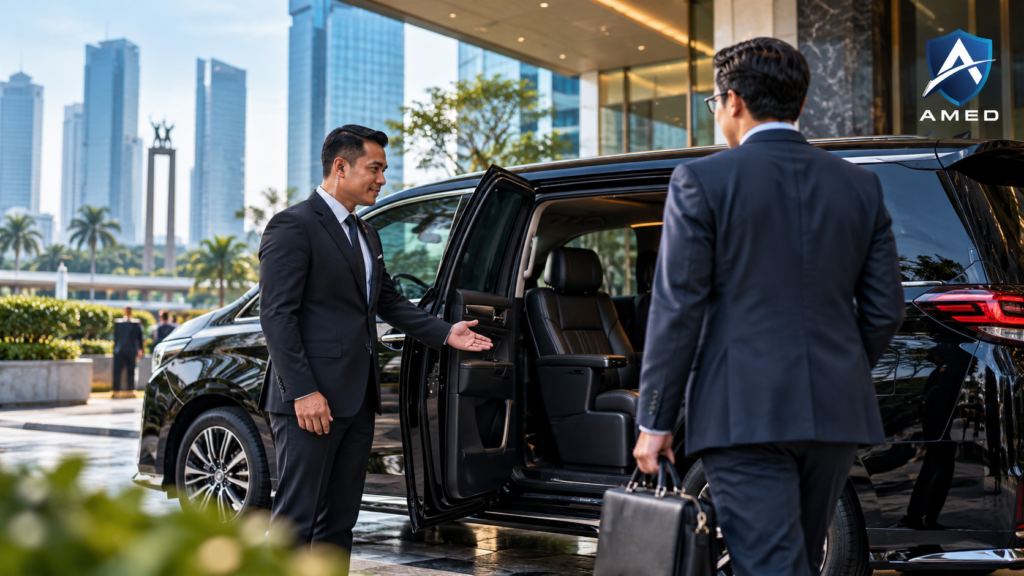
International executives, corporate directors, investors, and VIP travelers often require transportation that goes beyond punctual pickup and a comfortable vehicle. Business travel in Indonesia may involve multiple meetings, unfamiliar roads, airport transfers, industrial site visits, and sensitive schedules. These circumstances make professional driving, discretion, and security awareness important parts of effective travel planning.
A security driver Indonesia service provides a professional driver with security awareness, local road knowledge, route planning skills, and the ability to support coordinated executive movements. Unlike a conventional chauffeur, a security-aware driver considers potential travel disruptions, passenger confidentiality, communication procedures, and appropriate responses to unexpected situations.
AMED Corporate Protection & Business Investigation provides secure transportation and executive protection services for international executives, expatriates, investors, and business travelers. Its published services include English-speaking drivers, premium MPV vehicles, route risk management, airport transfers, and travel coordination.
What Is a Security Driver in Indonesia?
A security driver is a professional driver whose responsibilities combine transportation with security awareness and operational coordination. The role includes safe driving, reviewing routes, understanding passenger requirements, maintaining discretion, and communicating relevant travel changes.
A security driver is not automatically the same as a close protection officer or armed security professional. The actual service depends on the driver’s training, operating procedures, legal responsibilities, and the protection arrangement agreed upon with the client.
For corporate travelers, the objective is to provide safe, reliable, and professionally coordinated movement without unnecessary disruption to the business itinerary.
The operating framework is:
Travel Itinerary → Risk Assessment → Route Planning → Vehicle Preparation → Secure Movement → Arrival Coordination
Why Do International Executives Need Security Drivers in Indonesia?
Business travelers may be unfamiliar with local road conditions, city layouts, transport arrangements, and operational requirements. When an executive needs to move between several locations, inconsistent transportation can create delays and additional coordination problems.
A security-aware driver helps address these challenges through local knowledge, advance planning, professional communication, and situational awareness. However, the level of additional security support should reflect the traveler’s actual exposure rather than assuming that every foreign visitor faces a high-risk environment.
1. Managing Unfamiliar Road and Traffic Conditions
Jakarta and other major Indonesian cities can present demanding traffic and route-planning conditions. Executives moving between airports, hotels, offices, and industrial districts benefit from a driver who understands the local road network and can respond appropriately to changing conditions.
Professional planning should also consider weather, road closures, scheduled events, and practical alternatives when the original itinerary changes.
2. Supporting Confidential Business Travel
Senior executives may carry confidential documents, business devices, or sensitive meeting information. Although a driver does not replace cybersecurity or corporate information-security controls, professional discretion can help limit unnecessary disclosure of passenger schedules and movements.
Clear communication arrangements also help executive assistants and corporate travel coordinators manage itinerary changes without distributing sensitive information more widely than necessary.
3. Coordinating Multiple Business Locations
International visitors may attend meetings at corporate headquarters, factories, warehouses, investment projects, and government institutions within a single trip. Each destination has different access requirements, travel times, and operational considerations.
A coordinated driver service helps connect these movements through a single travel plan, reducing avoidable confusion and supporting business continuity.
Security Driver vs. Regular Executive Chauffeur
Both services may offer professional drivers and comfortable vehicles, but their operational priorities can differ.
| Comparison | Regular Executive Chauffeur | Security-Aware Driver |
| Primary focus | Comfortable transportation | Transportation with security awareness |
| Route planning | Standard navigation | Advance planning and alternative routes |
| Local risk awareness | General road conditions | Travel disruptions and situational factors |
| Itinerary | Pickup and drop-off schedule | Coordinated executive movements |
| Communication | Passenger service | Passenger, assistant, and security coordination |
| Confidentiality | Professional customer discretion | Discretion integrated into travel procedures |
| Protection support | Usually transportation only | May coordinate with protection officers |
A security driver should not be described as a complete executive protection solution unless the service actually includes the additional personnel and capabilities required. In higher-exposure assignments, the driver may work alongside a dedicated executive protection officer.
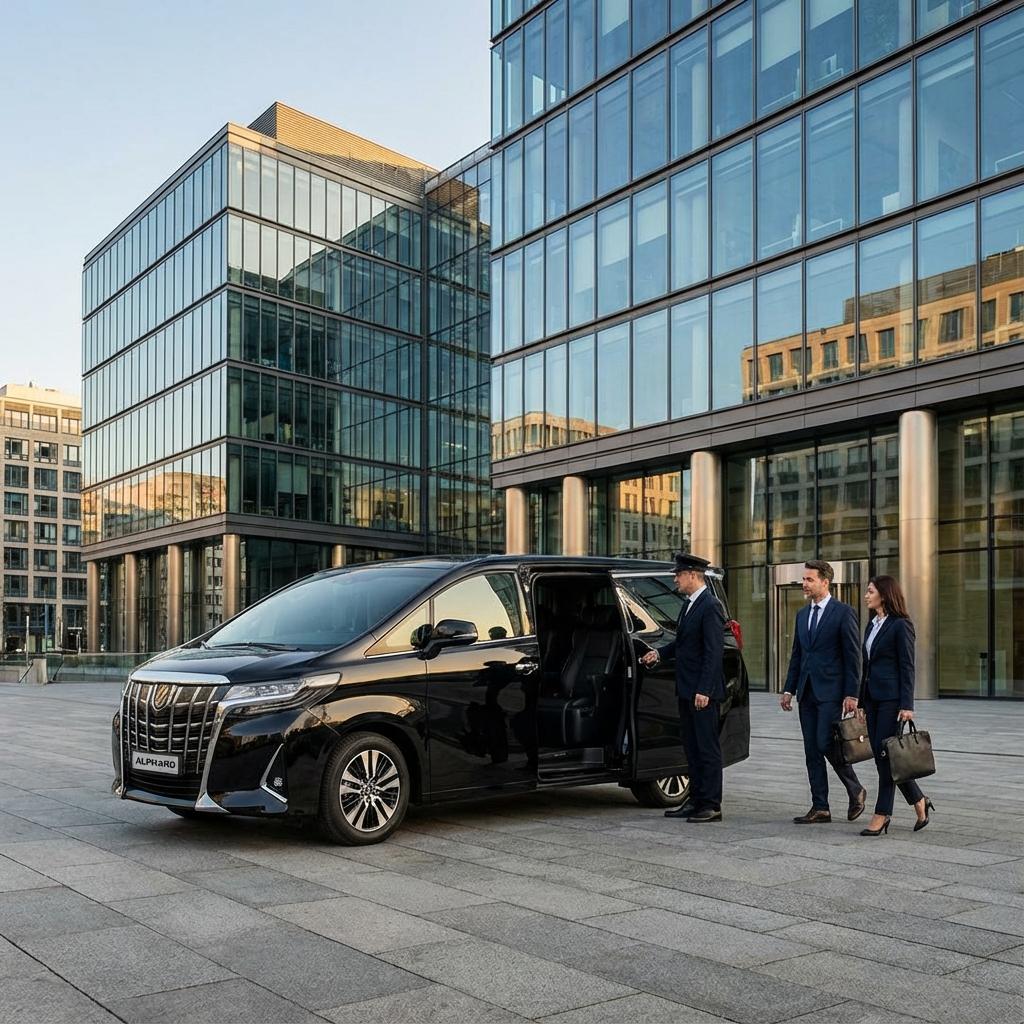
7 Essential Qualities of a Professional Security Driver
Companies should evaluate the driver’s qualifications and operational readiness before arranging an executive transportation service. The following factors help procurement teams and executive assistants identify suitable providers.
1. Professional Driving Skills
A security driver must demonstrate safe, lawful, and controlled driving. Defensive driving principles, awareness of surrounding traffic, responsible speed management, and proper vehicle handling are more important than aggressive driving techniques.
Organizations should verify the relevant driver’s license, experience, and any training claimed by the provider.
2. Local Route Knowledge
A qualified driver should understand major business districts, airport access, local traffic patterns, and practical route alternatives. Familiarity with the destination helps the driver manage travel efficiently without depending entirely on navigation applications.
Advance route review becomes particularly useful when executives need to visit industrial sites or unfamiliar regional locations.
3. Situational Awareness
Situational awareness means identifying relevant changes in the surrounding environment and responding proportionately. Examples include unexpected road restrictions, unusually congested access points, changes to venue entry arrangements, and other travel disruptions.
The objective is to support prudent decisions and passenger safety, not to encourage unnecessary confrontation or risky driving.
4. Confidentiality and Professional Discretion
Executive transportation often involves private schedules, meetings, conversations, and business relationships. Drivers should understand confidentiality expectations and avoid sharing passenger information without authorization.
Companies should also clarify how itinerary information, contact details, and movement updates will be handled.
5. Clear Communication Skills
International executives may require drivers who communicate effectively in English. Communication skills help prevent misunderstandings regarding airport pickup, meeting locations, schedule changes, and coordination with executive assistants.
AMED explicitly lists English-speaking drivers among its published secure transportation capabilities.
6. Vehicle Readiness and Inspection
Before departure, the provider should confirm that the vehicle is suitable for the assignment and meets applicable legal and operating requirements. Routine checks may address tires, brakes, lights, fuel, cleanliness, passenger comfort, and emergency equipment as appropriate.
A premium vehicle alone does not establish that the transportation arrangement provides a higher level of security.
7. Emergency Communication and Coordination
Drivers should know how to communicate a disruption, request assistance, and follow established procedures when an unexpected incident occurs. Their responsibilities must remain consistent with their training and the agreed service scope.
For assignments requiring additional personal protection, a dedicated executive protection officer may provide support beyond the driver’s normal duties.
The selection framework is:
Driving Capability → Local Knowledge → Security Awareness → Confidentiality → Communication → Vehicle Readiness → Coordination
What Risks Can a Security Driver Help Manage?
A professionally coordinated security driver can help reduce avoidable operational exposure, but no transport service can guarantee freedom from accidents, crime, or unexpected disruptions.
| Travel Concern | Appropriate Response |
| Heavy traffic and road closures | Advance route assessment and alternative-route planning |
| Unfamiliar airport pickup procedures | Confirmed meeting point and driver communication |
| Sudden itinerary changes | Coordination with the passenger and travel manager |
| Industrial site access | Advance confirmation of entry and visitor arrangements |
| Sensitive executive schedules | Discretion and controlled information sharing |
| Unusual road or destination conditions | Situational assessment and appropriate escalation |
| Higher personal-security exposure | Assessment of additional executive protection needs |
These procedures support better preparation and communication. The driver’s role should remain focused on safe transportation, awareness, and proportionate action within the agreed service arrangement.
Official Data: Why Road Safety Matters in Executive Transportation
The World Health Organization’s Global Status Report on Road Safety 2023 estimated approximately 1.19 million road traffic deaths worldwide annually, based on its reporting framework and underlying reference data. Road traffic injuries remain a major international public safety concern.
For Indonesia, the WHO country profile reported 25,266 recorded road traffic fatalities in 2021 and estimated approximately 31,063 fatalities for the same year. These figures are historical road safety statistics, not the number of incidents involving executives or security-driver services.
Official sources:
- WHO – Global Status Report on Road Safety 2023
- WHO – Indonesia Road Safety Country Profile
- WHO – South-East Asia Regional Road Safety Report
These statistics provide a rationale for considering road safety and professional driving in corporate travel. They do not prove that security drivers eliminate traffic risks or guarantee particular safety outcomes.
International business travelers should also consult the UK Government’s Indonesia Travel Advice for information about road conditions, travel security, and current local considerations.
How Does a Security Driver Service Work?
Professional executive transportation begins before the passenger enters the vehicle. Travel coordinators should communicate the itinerary, assess relevant operational factors, and agree on the service arrangement in advance.
1. Travel Requirement and Itinerary Review
The process begins with the travel dates, pickup location, destinations, number of passengers, luggage requirements, and relevant schedule constraints. The provider may also need to understand confidentiality expectations and whether the traveler requires separate protection personnel.
2. Driver and Vehicle Assignment
The provider identifies a suitable driver and vehicle based on the assignment. Passenger requirements, language preferences, vehicle capacity, and travel duration should be confirmed before the service begins.
3. Route and Movement Preparation
The driver reviews the itinerary and available route options, considering local road conditions, travel time, and destination access. Coordination should include practical contingency arrangements without making unrealistic guarantees about arrival times.
4. Executive Transportation
During travel, the driver focuses on safe movement, professional communication, and appropriate responses to changing conditions. The service should minimize unnecessary disruption while supporting the passenger’s business schedule.
5. Arrival and Ongoing Coordination
For multiple appointments, the driver and coordinator confirm subsequent pickup arrangements and itinerary updates. Assignments with higher security requirements may also involve coordination with executive protection personnel.
The process follows:
Booking Requirements → Driver Assignment → Route Review → Vehicle Preparation → Travel Coordination → Arrival → Next Movement
Example: Security Driver for an International Executive Visiting Jakarta
Consider a regional executive arriving in Jakarta for a two-day business trip involving corporate meetings and a manufacturing site visit. The traveler needs airport pickup, hotel transfers, transportation between business appointments, and a return transfer to the airport.
A coordinated itinerary could look like this:
| Day | Business Activity | Transportation Requirement |
| Day 1 | Airport arrival and hotel check-in | Confirmed airport pickup and hotel transfer |
| Day 1 | Headquarters meeting | Coordinated pickup and destination access |
| Day 1 | Business dinner | Flexible return arrangement |
| Day 2 | Industrial facility visit | Advance route and site-entry coordination |
| Day 2 | Final corporate meeting | Schedule management |
| Day 2 | Airport departure | Planned transfer allowing for traffic conditions |
This is a hypothetical planning example, not a record of an AMED client assignment. Actual travel arrangements should reflect the destinations, timing, and passenger requirements.
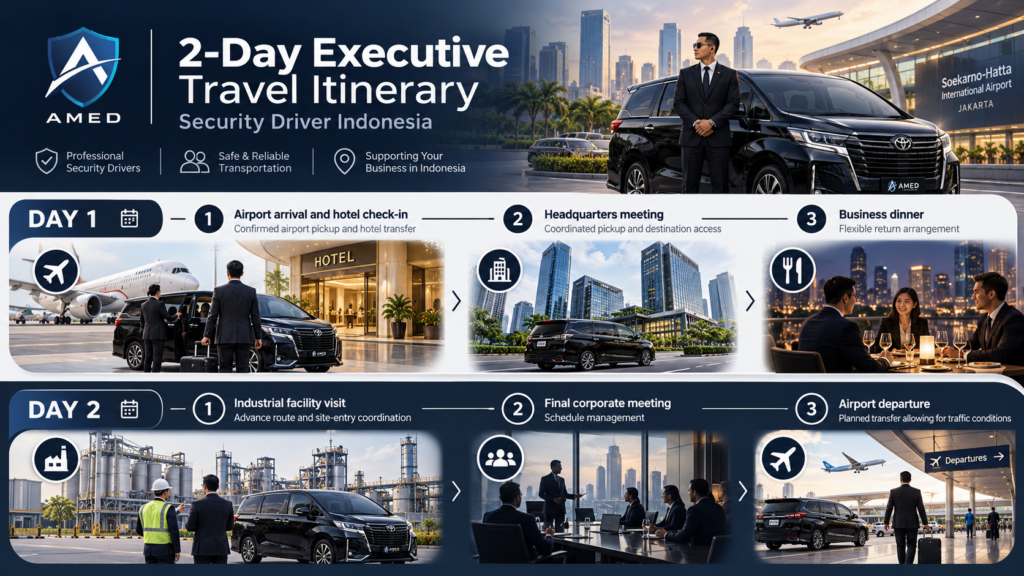
A single coordinated provider can simplify communication across the itinerary, particularly when the executive is unfamiliar with the local area.
When Should Companies Add an Executive Protection Officer?
A security-aware driver and an executive protection officer perform different functions. A driver primarily manages vehicle operation and coordinated transportation, while a protection officer may provide personal threat assessment, protective escort, and other approved security functions.
Additional protection may be worth considering when the individual has substantial public exposure, faces credible personal threats, or requires greater security coordination because of the destination or nature of the assignment.
AMED publishes both secure transportation and executive protection services. This allows clients to inquire about separate levels of support rather than assuming that every transportation package includes a dedicated close protection officer.
For more information, review AMED Executive Protection Indonesia.
AMED Expertise in Security Driver and Executive Transportation Services
AMED Corporate Protection & Business Investigation publishes executive protection and secure transportation services for CEOs, foreign investors, expatriates, executives, VIPs, and international business travelers in Indonesia.
Its Executive Protection page specifically identifies security-aware professional drivers, English-speaking communication, premium MPV transportation, route risk management, and airport transfers. The company also describes travel coordination for business meetings, industrial inspections, site visits, and regional assignments.
Security-Aware Transportation for Executive Travel
AMED’s published service model combines professionally coordinated transportation with elements of situational awareness and route planning. Its approach is intended to help executives travel between airports, hotels, business locations, and other destinations with greater consistency and discretion.
The company’s Secure Transportation Indonesia article explains the relationship between itinerary planning, alternative routes, vehicle preparation, movement coordination, and arrival arrangements.
Safe-Guide and Executive Protection Options
AMED’s official service page lists several options that help clients distinguish between transportation support and broader protection arrangements.
| Published AMED Service | Main Scope |
| Safe-Guide Day Service | Driver, security-trained guide, premium vehicle, and English-speaking assistance |
| Executive Protection Detail | Dedicated protection personnel and advance travel coordination |
| Corporate Protection Program | Longer-term security coverage and executive movement coordination |
The scope, personnel, pricing, service hours, and coverage must be reconfirmed directly with AMED before booking. Different assignments may require different transportation and protection arrangements.
Executive Movements Across Indonesia
AMED publishes services for Jakarta, Bali, and regional business travel. Its portfolio includes coordination relevant to corporate visits, site inspections, airport transfers, and executive movement planning.
These published capabilities support the company’s positioning in security-aware transportation. However, specific driver certifications, armed protection capabilities, armored vehicles, or government affiliations should not be assumed unless AMED confirms them through appropriate documentation.
How to Choose a Security Driver Provider in Indonesia
International corporate buyers should evaluate the provider’s documented capabilities instead of comparing vehicle appearance or daily rates alone. The right arrangement depends on the traveler’s itinerary, required level of security, service duration, and local operational needs.
Before confirming a service, ask the provider to clarify driver qualifications, insurance and vehicle arrangements, operating hours, language capability, route planning responsibilities, communication procedures, and whether dedicated executive protection personnel are included.
Use this procurement framework:
Traveler Profile → Itinerary → Required Security Level → Driver Capability → Vehicle → Service Scope → Quotation → Confirmation
A written agreement should make responsibilities clear, particularly for multi-day assignments and travel beyond major city centers.
FAQ About Security Driver Indonesia
What is a security driver in Indonesia?
A security driver is a professional driver who combines safe transportation with security awareness, route planning, discretion, and operational coordination. The exact responsibilities depend on the provider’s training and agreed service scope.
What is the difference between a security driver and a chauffeur?
A conventional chauffeur primarily focuses on transportation, comfort, and customer service. A security-aware driver adds greater attention to route assessment, situational awareness, discretion, and coordination with security personnel when necessary.
Do foreign executives need a security driver in Jakarta?
Not every executive requires a security driver. The decision depends on itinerary complexity, familiarity with local conditions, confidentiality needs, personal exposure, and the organization’s travel risk assessment.
Does a security driver also provide close protection?
Not necessarily. A security driver and an executive protection officer perform different responsibilities, although they may work together. Clients should confirm whether dedicated protection personnel are included in the service.
Can AMED arrange executive airport transfers?
Yes. AMED lists airport transfers as part of its secure transportation services, along with English-speaking drivers, premium MPVs, and route risk management. Availability and arrangements should be confirmed for the requested airport and travel dates.
Are AMED security drivers English-speaking?
AMED’s official Executive Protection page includes English-speaking drivers within its secure transportation offering. Clients should confirm the language requirements when arranging a specific assignment.
Can a security driver support factory and industrial site visits?
Yes. Professionally coordinated transportation may support industrial inspections, factory visits, warehouse meetings, and regional travel. AMED includes business travel security coordination for such activities in its published services.
What vehicles are available for AMED executive transportation?
AMED publishes premium MPV vehicles as part of its secure transportation offering. The exact make, model, capacity, and availability should be confirmed directly because the published page does not guarantee a particular vehicle for every booking.
How much does a security driver cost in Indonesia?
The price depends on service duration, location, vehicle, driver requirements, and whether additional protection personnel are needed. AMED publishes indicative protection package pricing, but clients should request a quotation for their specific itinerary.
How can international companies book AMED transportation?
Corporate travel coordinators can contact AMED with the travel dates, locations, itinerary, passenger requirements, preferred vehicle, and necessary security support. AMED can then discuss service availability and a suitable arrangement.
Arrange Professional Security Driver Services with AMED
Choosing a security driver Indonesia service requires more than hiring a premium car and a professional chauffeur. Executives and international business travelers benefit from safe driving, local knowledge, confidentiality, route preparation, and reliable travel coordination that match their actual requirements.
AMED provides security-aware transportation as part of its published executive protection services in Indonesia. Its service information covers professional English-speaking drivers, premium vehicles, route risk management, airport transfers, and the option to coordinate additional executive protection when required.

Planning an executive visit, investment trip, or corporate itinerary in Indonesia? Contact AMED Corporate Protection & Business Investigation to discuss security driver requirements, airport transfers, business travel coordination, and an appropriate service quotation.
Travel Requirements → Security Assessment → Professional Driver → Route Coordination → Secure Transportation → Business Continuity