
Why Cybersecurity Executive Protection Matters
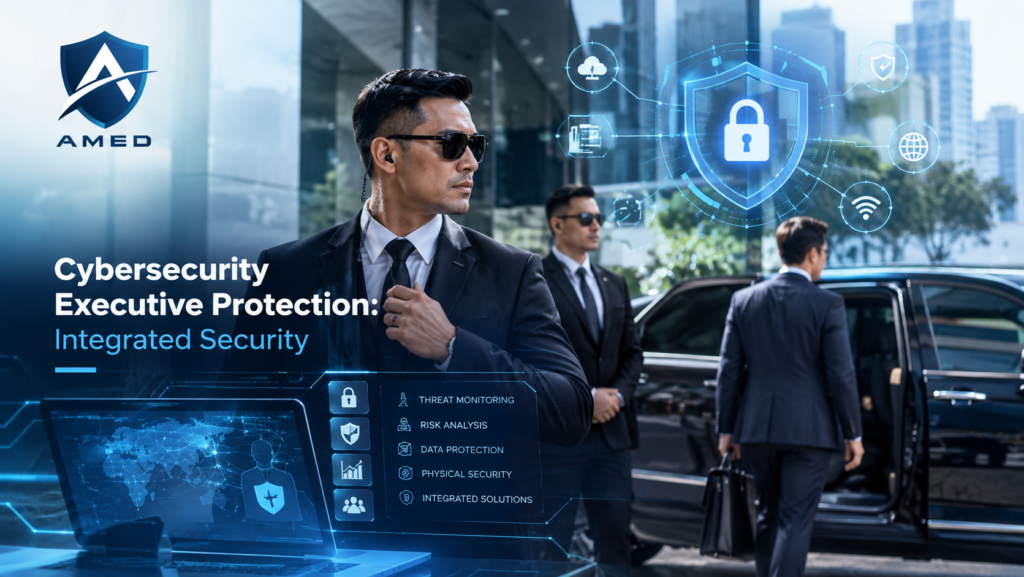
Cybersecurity executive protection combines digital risk awareness with physical security planning to help protect business leaders, their sensitive information, and their business activities. For international companies, executive protection should consider not only where a leader travels but also how they communicate, access corporate systems, and share business information.
Executives regularly handle confidential documents, financial discussions, investment plans, supplier information, and strategic decisions. When cyber threats intersect with physical security risks, a compromised account or exposed itinerary can create additional challenges for executive safety and business continuity.
An integrated approach connects digital security policies, executive travel planning, threat assessment, and incident response. Companies can then manage risks more consistently across offices, business meetings, industrial visits, and international travel.
What Is Cybersecurity Executive Protection?
Cybersecurity executive protection is a coordinated risk-management approach that addresses digital threats affecting executives alongside their physical security requirements. It does not replace an organization’s IT security program or professional executive protection services. Instead, it connects relevant teams, procedures, and information so they can respond to overlapping risks.
For example, a fraudulent email may target an executive’s corporate account, while publicly available travel information may expose their planned movements. These are different security problems, but they can affect the same person and create related business risks.
An integrated program therefore considers three areas:
- Digital protection: Account security, phishing awareness, access controls, and responsible handling of confidential information.
- Physical protection: Executive risk assessment, secure transportation, route planning, and situational awareness.
- Operational coordination: Clear reporting channels, communication procedures, and incident escalation between relevant teams.
Why Companies Need an Integrated Approach
1. Executives Handle Sensitive Business Information
Senior leaders often approve transactions, negotiate partnerships, and access commercially sensitive information. Attackers may exploit their authority through impersonation, phishing, or fraudulent payment requests.
Companies should strengthen account protection, verify sensitive instructions through independent channels, and limit access to information according to business needs. The objective is to reduce opportunities for unauthorized access and financial deception.
2. Business Travel Creates Overlapping Risks
Executives visiting a new country may rely on mobile devices, hotel networks, messaging applications, online calendars, and remote access to company systems. At the same time, they need reliable transportation, practical route planning, and awareness of local conditions.
Combining cybersecurity procedures with travel security helps companies address both areas without treating them as separate activities. AMED’s Executive Protection services support executive movement, secure transportation, threat assessment, and business travel security in Indonesia.
3. Digital Exposure Can Affect Physical Security
Publicly shared itineraries, meeting locations, photographs, and business announcements can reveal information about an executive’s activities. Companies should review what they publish, limit unnecessary disclosure of personal details, and establish clear rules for sharing travel information.
Security teams can incorporate relevant digital exposure into their wider risk assessment. However, companies should distinguish verified threats from assumptions and avoid collecting personal information beyond legitimate security requirements.
4. Security Incidents Can Disrupt Business Continuity
A compromised executive account, fraudulent payment instruction, or unexpected travel disruption can delay decisions and affect business operations. When responsibilities are unclear, employees may not know whom to contact or how to verify urgent instructions.
An integrated response plan establishes reporting channels, decision-making responsibilities, alternative communication methods, and escalation procedures. These arrangements help the organization respond consistently while protecting confidential information.
5. International Operations Require Local Coordination
Global companies operating in Indonesia may need local knowledge when arranging executive meetings, investment visits, supplier assessments, and industrial inspections. International security policies remain important, but their practical application must reflect local operating conditions.
AMED supports executive protection, transportation, and business-related coordination in Indonesia. Companies can discuss their travel plans and security requirements before arrival to determine the appropriate scope of support.
What the Latest Cybersecurity Data Shows
Cybersecurity risks are not limited to technical vulnerabilities. Social engineering and fraudulent business communications can also target executives and financial decision-makers.
According to the FBI Internet Crime Complaint Center (IC3), its September 2024 public service announcement reported approximately US$55.5 billion in exposed losses associated with business email compromise (BEC) across domestic and international complaints from October 2013 through December 2023. This is a cumulative figure covering that reporting period, not a single-year loss estimate.
BEC attacks often involve impersonation or deceptive communications intended to persuade employees or business partners to transfer funds or disclose sensitive information. Executive impersonation and fraudulent payment instructions demonstrate why organizations need clear verification procedures alongside technical security controls.
Source: FBI IC3 — Business Email Compromise: The $55 Billion Scam.
The European Union Agency for Cybersecurity (ENISA) also published its 2026 Threat Landscape on September 22, 2026. The report examines cyber incidents and events observed during 2025, highlighting the changing threat environment and the influence of geopolitical developments and interconnected digital ecosystems.
Source: ENISA Threat Landscape 2026.
These findings support a practical conclusion: companies should combine preventive controls, employee awareness, incident reporting, and coordinated security planning rather than rely on a single defensive measure.
How Companies Can Integrate Cybersecurity and Executive Protection
1. Assess Digital and Physical Exposure
Identify the executive’s role, travel requirements, sensitive information access, and relevant security concerns. The assessment should consider account security, public exposure, business schedules, transportation, meeting locations, and emergency contacts.
Organizations should prioritize documented risks and assign clear responsibility for each issue.
2. Strengthen Everyday Cybersecurity Practices
Companies should apply practical controls recommended by established cybersecurity authorities, including:
- Use strong, unique passwords and a reputable password manager.
- Enable multifactor authentication (MFA) for important accounts.
- Recognize and report phishing attempts.
- Verify unusual payment requests and sensitive changes through a separate trusted channel.
- Apply appropriate access controls and keep devices and software updated.
The US Cybersecurity and Infrastructure Security Agency (CISA) recommends recognizing and reporting phishing, using strong passwords, and enabling MFA as key steps for improving everyday digital security.
Reference: CISA — Secure Our World.
3. Coordinate Executive Travel Security
Before business travel, organizations should review the itinerary, transportation requirements, meeting arrangements, and relevant local conditions. They should also establish how executives will report concerns and receive verified updates if plans change.
For travel in Indonesia, AMED provides executive protection, secure transportation, route planning, and business travel security. These services can support physical security arrangements while the client’s internal IT or cybersecurity team manages digital controls.
4. Establish Incident Response Responsibilities
Companies should define who handles suspected account compromise, fraudulent instructions, lost devices, travel disruptions, and physical security concerns. Each scenario requires an appropriate response, and digital incidents should be referred to qualified IT or cybersecurity personnel.
The executive, corporate security team, IT department, finance team, and local support provider should understand their respective responsibilities. This reduces confusion and helps the organization escalate incidents through the correct channels.
5. Review and Improve the Program
Security requirements change as executives travel, responsibilities evolve, and business operations expand. Companies should periodically review their procedures, test communication arrangements, evaluate incidents, and update controls based on lessons learned.
An effective program focuses on continuous improvement rather than assuming that a single assessment can eliminate every risk.
AMED’s Expertise in Executive Protection and Business Support
AMED provides executive protection and business-related support for executives, expatriates, investors, and business travelers operating in Jakarta, Bali, and other locations in Indonesia, subject to operational requirements.

Its published services include executive protection officers, threat assessment, situational awareness, secure transportation, route planning, and business travel security. These capabilities can help organizations coordinate physical protection during meetings, airport transfers, site visits, and industrial inspections.
For companies planning investments or entering the Indonesian market, AMED also provides business investigation and local business support. This allows clients to discuss relevant partner-verification, market-entry, and on-the-ground coordination requirements alongside their executive travel plans.
AMED’s role in an integrated security arrangement is focused on executive protection and related local support. Organizations should retain qualified IT and cybersecurity specialists for technical security assessments, system monitoring, incident investigation, and remediation unless a separately verified engagement explicitly covers those services.
AMED is part of the EFBA network. Within that network, EFBA Digital Mulia publishes business consulting, website development, digital services, and IT consulting offerings. Its IT consulting service includes cybersecurity among its stated service areas. The appropriate technical scope should be confirmed directly with the provider.
Meanwhile, EFBA Agro International operates in agricultural commodity sourcing and wholesale exports. Its international procurement and export activities illustrate a different business context in which companies may need disciplined information handling, reliable communications, supplier coordination, and secure commercial documentation. These operational considerations do not, by themselves, establish that EFBA Agro provides cybersecurity services.
By keeping each organization’s responsibilities clear, companies can coordinate physical security, digital risk management, and business operations without confusing one provider’s expertise with another’s.
Building a More Resilient Executive Protection Program
A practical program starts with a clear risk assessment and assigns responsibilities to the right people. Companies should combine cybersecurity policies, executive travel procedures, secure communications, and incident response arrangements according to their actual operating requirements.
For organizations bringing executives or investors to Indonesia, AMED can discuss executive protection, secure transportation, and business travel support. Technical cybersecurity requirements should be assessed with the organization’s IT team or an appropriately qualified specialist.
Frequently Asked Questions
What is cybersecurity executive protection?
Cybersecurity executive protection is an integrated approach that considers digital threats affecting business leaders alongside physical security risks. It connects account protection, information-handling practices, executive travel planning, and incident response without treating them as unrelated activities.
Why do executives need both cybersecurity and physical protection?
Executives may face digital threats such as phishing, account compromise, and impersonation, as well as physical risks during meetings and travel. Coordinating both areas helps organizations manage overlapping risks and establish clearer response procedures.
How can companies protect executives during international business travel?
Companies should assess relevant travel risks, secure corporate accounts, enable MFA, verify sensitive instructions, limit unnecessary disclosure of itineraries, and establish clear emergency communication procedures. Local executive protection and transportation support can address the physical security aspects of travel.
Does AMED provide cybersecurity services?
AMED’s published services focus on executive protection, secure transportation, threat assessment, and business travel security. For technical cybersecurity services, companies should consult their internal IT team or an appropriately qualified provider. EFBA Digital Mulia separately publishes IT consulting services that include cybersecurity.
What role does EFBA play in an integrated security approach?
AMED is part of the EFBA network, which includes businesses with different areas of expertise. EFBA Digital Mulia publishes business and IT consulting services, while EFBA Agro International focuses on agricultural commodity sourcing and export. Companies should confirm each provider’s scope before assigning responsibilities.
When should a company review its executive protection strategy?
Companies should review their strategy when executives change travel patterns, enter new markets, assume new responsibilities, face credible threats, or experience a security incident. Periodic reviews also help keep procedures aligned with changing business requirements.
Protect Your Executives with a Coordinated Approach
Executive security works best when organizations understand their risks, assign clear responsibilities, and coordinate the right resources. Digital safeguards and physical protection address different threats, but together they can support more consistent risk management and business continuity.

If your organization is planning executive travel, investment meetings, industrial visits, or business operations in Indonesia, contact AMED to discuss your executive protection and secure transportation requirements.