

The best places to invest in Indonesia offer different opportunities depending on industry requirements, investment budgets, and long-term business objectives. Jakarta provides access to corporate customers and professional services, while Batam supports international trade and manufacturing. Meanwhile, industrial regions in West Java, Central Java, and East Java offer established production facilities and supporting supply chains.
Among the best places to invest in Indonesia are Jakarta, Batam, Cikarang, Karawang, Kendal, Gresik, Surabaya, Bali, Medan, and Makassar. Each destination offers specific commercial advantages. However, investors should evaluate market feasibility, infrastructure, regulations, and operating costs before choosing a location.
Furthermore, foreign companies must assess business partners, property conditions, licensing requirements, and potential investment risks. Through market research, corporate investigation, and location due diligence, investors can make more informed decisions while reducing uncertainty during business expansion.
Why Is Indonesia an Attractive Investment Destination?
Indonesia offers investment opportunities across manufacturing, logistics, trade, services, and industrial processing. Its large domestic market and established regional business ecosystems provide various options for international companies.
Furthermore, Indonesia has developed industrial estates and special economic zones that support different commercial activities. Nevertheless, investment suitability depends on infrastructure, market access, regulatory requirements, and operational conditions.
According to Indonesia’s Ministry of Investment and Downstream Industry/BKPM, total realized investment reached IDR 1,539.2 trillion during January–September 2026. This represented a 7.3% increase compared with the corresponding period in 2025.
Meanwhile, foreign direct investment contributed approximately IDR 777.8 trillion, accounting for 50.5% of total realized investment.
The report identified Jakarta, West Java, Central Sulawesi, East Java, and North Maluku as the five provinces with the largest investment realization during this period.
However, these figures represent actual capital investment rather than projected financial returns. Therefore, companies should use national investment statistics as market context while evaluating each potential project individually.
Where Are the Best Places to Invest in Indonesia?
Indonesia has commercial districts, industrial estates, special economic zones, and regional business centers. Each location supports different economic activities and investment requirements.
Consequently, investors should consider industry compatibility rather than choosing destinations based solely on investment popularity.
The following nine location groups represent potential investment destinations for different types of businesses.
1. Jakarta: Corporate Services, Technology, and Business Headquarters
Jakarta serves as a major commercial and administrative center in Indonesia. The city offers access to corporate clients, financial services, professional networks, and established business infrastructure.
As a result, foreign companies may consider Jakarta for corporate headquarters, technology services, consulting, sales operations, and business-to-business activities.
Furthermore, its commercial ecosystem supports relationships with customers, suppliers, and professional advisers.
However, investors should carefully evaluate rental expenses, market competition, recruitment requirements, and operating costs before establishing a business.
Best investment fit: Corporate services, technology-related businesses, consulting, financial services, and national sales operations.
2. Batam: Export Manufacturing and International Trade
Batam occupies a strategic location near Singapore and operates within Indonesia’s Free Trade Zone and Free Port framework.
Consequently, the region attracts interest from companies involved in manufacturing, logistics, industrial services, and international trade.
Its proximity to regional commercial networks also makes Batam relevant for export-oriented operations.
Furthermore, BP Batam provides official investment information, industrial estate resources, and integrated licensing services.
Nevertheless, investors must verify applicable regulations, customs arrangements, and available incentives for their specific business activities.
Best investment fit: Export-oriented manufacturing, electronics-related production, logistics, and international trade.
3. Cikarang and Bekasi: Manufacturing and Industrial Supply Chains
Cikarang and surrounding areas in Bekasi Regency form part of West Java’s established industrial ecosystem.
The region contains manufacturing facilities, industrial estates, warehouses, and supporting supplier networks.
Therefore, businesses seeking access to manufacturing operations and the Greater Jakarta market may consider this location.
In addition, its industrial ecosystem supports automotive-related activities, distribution facilities, and industrial services.
However, companies should evaluate utilities, transportation infrastructure, environmental requirements, and operating costs before selecting an industrial estate.
Best investment fit: Manufacturing, supplier operations, distribution facilities, and industrial warehousing.
4. Karawang: Industrial Production and Factory Expansion
Karawang represents another established manufacturing region in West Java.
Its industrial ecosystem offers potential locations for factories, production facilities, and industrial supply-chain operations.
Furthermore, manufacturers considering capacity expansion may evaluate Karawang because of its existing industrial infrastructure.
Before choosing a site, however, investors should compare land status, utilities, logistics connections, and workforce availability.
Additionally, companies must assess environmental permits, production requirements, and development readiness.
Best investment fit: Manufacturing plants, automotive supply chains, industrial components, and production expansion.
5. Kendal: Manufacturing Investment in Central Java
Kendal Special Economic Zone, located near Semarang, provides a designated industrial investment environment in Central Java.
According to its official investment information, the area supports sectors such as manufacturing, automotive components, electronics, textiles, and food processing.
Moreover, the zone highlights industrial infrastructure and access to supporting transportation facilities.
These characteristics make Kendal relevant for companies evaluating manufacturing expansion outside Greater Jakarta.
Nevertheless, investors should confirm permitted business activities, applicable incentives, development conditions, and facility availability before making investment commitments.
Best investment fit: Manufacturing, garment-related industries, electronics, food processing, and industrial expansion.
6. Gresik: Industrial Processing and Port-Related Operations
Gresik offers potential opportunities in manufacturing, industrial processing, and logistics.
The Gresik Special Economic Zone forms part of Indonesia’s official special economic zone network.
Consequently, the region may appeal to companies seeking designated industrial developments and processing facilities.
Furthermore, its proximity to Surabaya’s commercial and logistics ecosystem can support supplier relationships and distribution activities.
However, investors must examine technical infrastructure, environmental obligations, industrial zoning, and operational requirements for each proposed project.
Best investment fit: Industrial processing, manufacturing, logistics, and supporting industrial services.
7. Surabaya: Trade, Logistics, and Regional Distribution
Surabaya is an important commercial and logistics center in East Java.
The city offers access to regional markets, distribution networks, and supporting commercial services.
Therefore, foreign companies may consider Surabaya when expanding operations beyond Greater Jakarta.
In addition, businesses can use Surabaya as a commercial base while nearby industrial regions support production or storage activities.
Nevertheless, investors should evaluate transportation costs, warehouse locations, port-related requirements, and customer accessibility before making a final decision.
Best investment fit: Regional distribution, logistics, commercial services, and trading operations.
8. Bali: Hospitality, Tourism, and Selected Service Investments
Bali offers business opportunities in hospitality, tourism, and selected consumer services.
Furthermore, the Sanur Special Economic Zone forms part of Indonesia’s official SEZ framework and focuses on health- and tourism-related development.
These characteristics may attract investors exploring hospitality and applicable wellness-related business activities.
However, tourism investments require careful consideration of seasonal demand, competition, property suitability, and licensing.
In addition, foreign companies must verify ownership restrictions and land-use requirements before entering commercial agreements.
Best investment fit: Hospitality, tourism services, and applicable health- or wellness-related business activities.
9. Medan and Makassar: Regional Market Expansion
Medan and Makassar offer potential locations for companies expanding their regional sales and distribution networks.
Medan provides access to North Sumatra’s commercial ecosystem. Meanwhile, Makassar serves as a potential gateway to eastern Indonesian markets.
Consequently, these cities may support trading companies, logistics providers, regional sales offices, and distribution operations.
Before establishing operations, however, investors should evaluate market demand, transportation routes, warehousing requirements, and local business relationships.
Furthermore, companies need to examine customer concentrations and distribution reliability to determine commercial feasibility.
Best investment fit: Regional distribution, trading, logistics services, and market expansion.
Comparison of Strategic Investment Locations in Indonesia
Choosing among the best places to invest in Indonesia requires a comparison of industry compatibility, infrastructure, and operational requirements.
The following table summarizes potential investment locations according to their commercial characteristics.
| Location | Suitable Investment Activities | Key Considerations |
|---|---|---|
| Jakarta | Corporate services, technology, sales | Operating costs, competition, market access |
| Batam | Export manufacturing, logistics | Customs framework, licensing, supplier networks |
| Cikarang–Bekasi | Manufacturing, warehousing | Utilities, industrial estate readiness |
| Karawang | Factories, industrial components | Land status, workforce, logistics |
| Kendal | Manufacturing, electronics, textiles | SEZ requirements, infrastructure |
| Gresik | Industrial processing, manufacturing | Environmental compliance, industrial infrastructure |
| Surabaya | Distribution, trade, logistics | Warehouse location, transportation costs |
| Bali | Hospitality and tourism services | Licensing, seasonal demand, property risks |
| Medan | Regional commerce and distribution | Market demand, distribution networks |
| Makassar | Eastern Indonesia market expansion | Logistics reliability, regional accessibility |
This comparison provides a qualitative overview rather than a ranking of expected investment returns.
For example, manufacturing companies may prioritize industrial utilities and supplier networks. In contrast, consulting businesses may place greater importance on access to corporate customers.
Therefore, investors should compare locations against their specific operating models and commercial objectives.
What Should Foreign Investors Consider Before Choosing a Location?
Foreign investment decisions require careful analysis of market conditions, infrastructure, regulations, and business relationships.
Moreover, companies should use consistent evaluation criteria when comparing potential locations.
The following six factors can help investors assess investment feasibility.
1. Market Demand and Industry Suitability
First, identify target customers, industry characteristics, and purchasing patterns in each region.
Although an area may attract substantial investment, it does not necessarily provide sufficient demand for every product or service.
Therefore, companies should evaluate customer concentrations, competition, pricing conditions, and distribution requirements.
In addition, market research can help investors determine whether a proposed location supports their commercial objectives.
2. Infrastructure and Supply-Chain Accessibility
Infrastructure quality directly influences operational efficiency.
For example, manufacturers need reliable electricity, water, transportation, waste management, and industrial facilities.
Meanwhile, distribution businesses may prioritize warehouse availability, port access, and connections to customers.
Therefore, investors should obtain current information from industrial estate operators and conduct site inspections when appropriate.
Furthermore, infrastructure conditions may differ between locations within the same region.
3. Licensing, Land Status, and Foreign Ownership
Foreign companies must determine the appropriate business classification and legal structure before establishing operations.
Indonesia’s risk-based business licensing framework includes Government Regulation No. 28 of 2025, with licensing processes administered through the Online Single Submission (OSS) system.
However, legal requirements vary according to business activity and industry classification.
Consequently, investors must verify foreign ownership rules, land rights, zoning, environmental obligations, and relevant construction permissions.
In addition, companies should obtain appropriate professional advice when interpreting regulatory requirements.
4. Workforce and Operating Costs
Investment feasibility depends on both operating expenses and access to necessary resources.
Therefore, investors should evaluate labor requirements, salaries, rental costs, utilities, logistics, and administrative expenses.
For specialized manufacturing, access to experienced workers and technical suppliers may also influence location suitability.
Furthermore, lower land prices do not automatically translate into lower total operating costs.
As a result, companies should compare complete cost structures before selecting a location.
5. Local Partners and Supplier Reliability
Foreign companies may need local suppliers, distributors, service providers, or commercial representatives.
These relationships can support market entry and operational development. However, they can also introduce counterparty risks.
Therefore, companies should verify corporate registration, relevant business activities, operational capabilities, and available ownership information.
In addition, professional background checks and business partner due diligence can help identify potential reputational or commercial concerns.
Through these activities, investors can make more informed decisions when establishing local partnerships.
6. Investment Risks and Long-Term Feasibility
Even promising investment destinations may involve operational and commercial risks.
For example, companies may encounter challenges involving project permits, infrastructure, supply chains, or business counterparties.
Consequently, investors should identify material risks before entering binding agreements.
Furthermore, financial feasibility studies, location assessments, corporate investigations, and appropriate legal reviews can support the evaluation process.
Nevertheless, no assessment can guarantee investment success or eliminate every future risk.
How to Choose the Right Investment Location in Indonesia
Selecting among the best places to invest in Indonesia requires a structured approach.
Rather than relying on popularity alone, companies should evaluate how each location supports their operational requirements and investment objectives.
The following five steps can guide the selection process.
1. Define the Investment Objective
Begin by identifying the company’s proposed business activity.
For example, an investor may plan to establish a corporate headquarters, manufacturing facility, distribution center, or regional office.
Each business model requires different infrastructure, market access, and regulatory arrangements.
Therefore, management should define the required capacity, target customers, investment budget, and expected operational timeline.
2. Shortlist Suitable Regions
Next, compare two or three locations that match the proposed business model.
Consider industry compatibility, logistics infrastructure, workforce availability, operating facilities, and access to customers.
In addition, official investment information can provide an initial reference when identifying suitable regions.
This approach helps companies concentrate their research on locations with realistic commercial potential.
3. Conduct Market and Location Due Diligence
After identifying potential locations, companies should conduct further research.
The process may include document reviews, site inspections, market research, and inquiries with relevant local parties.
Furthermore, investors should verify important claims about industrial facilities, infrastructure, and commercial arrangements.
If the project involves local partners or suppliers, appropriate corporate background checks can provide additional information.
Consequently, due diligence helps management identify potential concerns before making significant investment commitments.
4. Evaluate Financial Feasibility
Financial evaluation helps companies understand the potential costs and commercial requirements of a project.
Therefore, investors should estimate capital expenditure, operating expenses, staffing requirements, logistics costs, working capital, and potential revenue.
In addition, scenario analysis can show how changes in demand or operating costs might influence project feasibility.
For example, a lower-cost location may still produce weaker financial results if transportation expenses increase or customer access becomes more difficult.
Thus, companies should compare total project economics rather than individual cost components.
5. Develop an Investment Action Plan
Finally, translate the evaluation results into a practical implementation plan.
The plan should cover licensing, site selection, partner verification, budgeting, and operational milestones.
Furthermore, management should assign responsibilities and establish progress review points.
With a clear action plan, companies can coordinate investment activities more systematically.
Recommended investment process:
Investment Objective → Regional Shortlist → Market Research → Site Verification → Partner Due Diligence → Financial Assessment → Investment Decision
What Do Official Investment Data Say About Indonesia in 2026?
According to BKPM’s report published in October 2026, Indonesia recorded IDR 1,539.2 trillion in realized investment during January–September 2026.
Foreign direct investment contributed approximately IDR 777.8 trillion. Meanwhile, domestic investment reached around IDR 761.4 trillion.
Furthermore, BKPM identified five provinces with the largest investment realization during the reporting period.
| Province | January–September 2026 Investment |
|---|---|
| Jakarta | IDR 249.3 trillion |
| West Java | IDR 229.1 trillion |
| Central Sulawesi | IDR 116.0 trillion |
| East Java | IDR 110.5 trillion |
| North Maluku | IDR 96.0 trillion |
In addition, BKPM reported IDR 480.0 trillion in downstream investment during the same period.
These figures illustrate ongoing investment activity in industrial processing and related sectors.
However, realized investment data do not represent future profitability or guarantee the commercial performance of individual projects.
Therefore, foreign investors should combine national investment statistics with project-specific market research, financial analysis, and regulatory verification.
Official references:
- BKPM – Investment Realization January–September 2026
- BKPM – Investment Realization Reports
- Indonesia Special Economic Zones – Official SEZ Locations
- BP Batam – Investment Opportunities
These official sources provide useful information about investment trends and designated industrial locations.
Nevertheless, companies should verify current project conditions directly with relevant authorities, industrial estate operators, and commercial counterparties.
Why Is Due Diligence Important Before Investing in Indonesia?
Foreign investors may encounter information gaps when evaluating unfamiliar industrial areas, commercial properties, or business partners.
Although public information and promotional materials can support initial research, they cannot replace independent verification.
Therefore, location due diligence helps investors examine potential risks before making significant commercial commitments.
Depending on the project, an assessment may involve company records, property-related information, operational conditions, supplier relationships, and relevant commercial risks.
For example, an international manufacturer may identify a potential production facility in Karawang.
Before committing capital, the company should review infrastructure availability, relevant permits, operating arrangements, and counterparties involved in the transaction.
Similarly, businesses appointing regional distributors should verify the prospective partner’s business activities and operational capabilities.
Furthermore, these checks can help management identify concerns before entering long-term agreements.
For related services, explore AMED Background Check Indonesia, which covers corporate intelligence, business partner due diligence, and market-entry preparation.
AMED Expertise in Investment Research and Business Investigation
AMED Corporate Protection & Business Investigation provides local business support for international companies, investors, and executives operating or planning activities in Indonesia.
Its published services include business investigation, corporate intelligence, market-entry preparation, business partner verification, and local coordination.
Furthermore, these services can help foreign investors obtain relevant information about commercial conditions before establishing operations.
Rather than relying solely on investment promotion materials, companies can use structured research to evaluate potential opportunities and risks.
1. Investment and Market Entry Preparation
AMED describes business support services for foreign investors exploring opportunities in Indonesia.
These activities include business consultation, local research, market exploration, and coordination related to commercial operations.
For example, companies comparing Jakarta, Batam, Karawang, or other investment destinations may require information about market conditions and potential business arrangements.
In addition, local research can support preliminary market-entry planning.
However, the actual assessment scope should reflect the client’s industry, objectives, and agreed requirements.
2. Corporate Investigation and Business Partner Verification
AMED provides corporate background checks and business partner due diligence support.
Its services involve reviewing relevant company information, business relationships, operational conditions, and potential areas of concern.
Consequently, these activities may help investors evaluate prospective suppliers, distributors, or local representatives.
Furthermore, verification can support management decisions before companies enter commercial agreements.
Nevertheless, investigation findings depend on available evidence and should not serve as guarantees of future business performance.
3. Local Business Coordination and Executive Visits
Foreign investors may require local coordination when visiting business locations, meeting counterparties, or inspecting industrial facilities.
AMED also publishes executive support services involving secure transportation, route planning, and situational awareness.
Therefore, these services may support business travel and site-visit arrangements when appropriate.
In addition, local coordination can help visiting executives organize relevant activities during their stay in Indonesia.
However, investors should confirm available assistance according to their itinerary and the agreed service scope.
For further information, explore Executive Protection Indonesia and Contact AMED.
EFBA Consulting and EFBA Business Development Support
Within the wider EFBA business ecosystem, EFBA Consulting provides professional consulting services involving Business Strategy, Marketing, Finance, Operations, and Business Development.
Its published approach includes business assessment, priority identification, strategy development, and action planning.
Furthermore, these services relate to business planning and organizational readiness when companies evaluate growth opportunities.
For example, investors may need to examine business models, market positioning, financial planning, and operational priorities before expanding into a new region.
In addition, structured business planning can help management connect strategic objectives with implementation activities.
However, business consulting and corporate investigation serve different purposes.
Therefore, companies should select professional services according to their specific commercial, operational, and due diligence requirements.
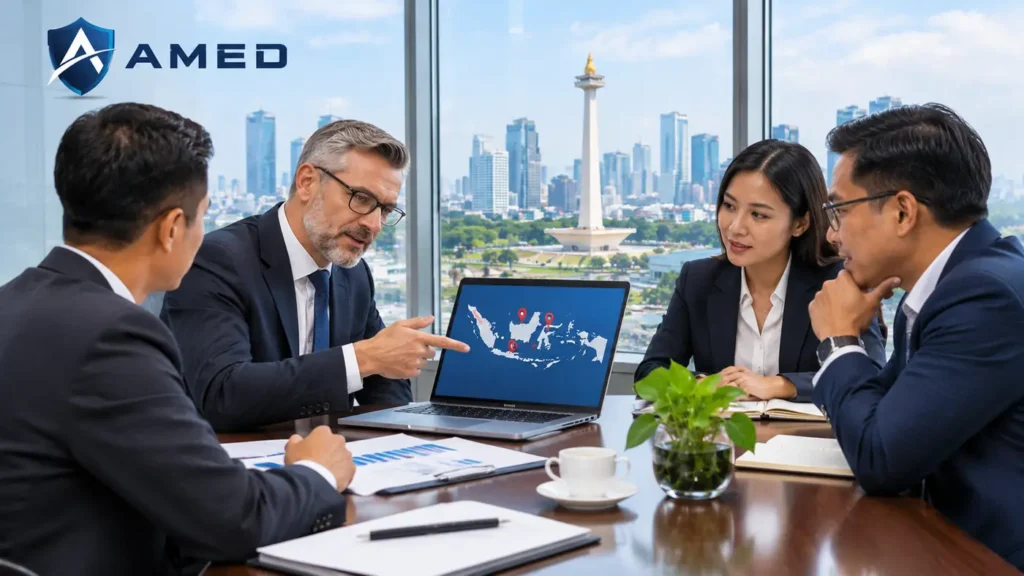
These services are relevant to investors who need to evaluate business feasibility, market positioning, operational requirements, or expansion planning before implementing a project.
Explore EFBA Consulting’s Professional Business Consulting for information about its strategic advisory approach.
Meanwhile, PT EFBA Digital Mulia publishes services covering market research, business planning, financial planning, and management development.
Together, these published service areas offer complementary business-planning and investigation capabilities. Any coordinated engagement, deliverables, or commercial responsibilities should be agreed upon directly with the relevant provider.
FAQ About the Best Places to Invest in Indonesia
1. What are the best places to invest in Indonesia?
Jakarta, Batam, Cikarang, Karawang, Kendal, Gresik, Surabaya, and Bali are important locations to evaluate. However, the best investment destination depends on the business sector, target market, infrastructure, operating costs, and applicable regulations.
2. Which location is best for foreign investors in Indonesia?
Jakarta may suit corporate services and headquarters, while Batam offers an environment relevant to export manufacturing and international trade. Industrial areas in West Java and Central Java may suit production investments. Investors should choose based on project requirements.
3. Is Batam a good place for foreign investment?
Batam offers access to international trade networks, established industrial areas, and a Free Trade Zone framework. These characteristics can support manufacturing and logistics activities. However, companies must verify applicable incentives, permits, and operating conditions.
4. Where should foreign companies build factories in Indonesia?
Cikarang, Karawang, Batam, Kendal, and Gresik are relevant areas for manufacturing investment. The appropriate location depends on utilities, industrial zoning, supplier proximity, workforce availability, environmental requirements, and logistics costs.
5. What are Special Economic Zones in Indonesia?
Special Economic Zones are designated areas established under Indonesian regulations to support specified economic activities and investment. Their sectors, facilities, and applicable incentives vary. Investors should review the official requirements for each SEZ before proceeding.
6. Can foreigners own a company in Indonesia?
Foreign investors can establish companies in Indonesia through permitted investment structures, including PT PMA arrangements where applicable. Ownership limitations and other conditions depend on the business sector and regulations. Professional legal review is recommended before establishment.
7. What should investors check before buying industrial property?
Investors should review land rights, zoning, permitted activities, utilities, environmental requirements, access roads, relevant permits, and transaction counterparties. Independent verification can help identify issues before a purchase or long-term lease.
8. How can investors reduce business risks in Indonesia?
Companies can use market research, financial feasibility studies, local partner verification, corporate background checks, and site due diligence. These activities support better decisions but cannot eliminate all future business or regulatory risks.
9. Does a high investment value mean a location is profitable?
No. Investment realization indicates the amount of capital invested during a specified period, not the profitability or expected returns of individual projects. Investors should conduct their own financial and operational assessments.
10. Can AMED help foreign investors evaluate locations in Indonesia?
AMED publishes services involving market-entry support, business investigation, corporate intelligence, background checks, and local coordination. Investors can discuss potential locations, counterparties, and verification needs with AMED according to their project requirements.
Explore Investment Opportunities in Indonesia with AMED
The best places to invest in Indonesia depend on industry compatibility, market potential, infrastructure, and commercial requirements. Jakarta offers established corporate networks, Batam supports international manufacturing activities, while industrial regions across Java provide additional opportunities for production and distribution.
However, successful investment planning requires more than selecting a popular location. Companies need to evaluate legal requirements, operating costs, market assumptions, business partners, and potential risks before committing resources.

AMED Corporate Protection & Business Investigation supports international investors through business investigation, corporate intelligence, market-entry preparation, partner verification, and local coordination. Through the wider EFBA ecosystem, companies can also explore business strategy, financial planning, and market research support.
Planning to establish operations, evaluate an industrial location, or verify a potential business partner in Indonesia? Visit AMED Corporate Protection & Business Investigation or contact the AMED team to discuss your investment requirements.
Make more informed investment decisions in Indonesia through structured market research, local verification, and professional business support with AMED.