
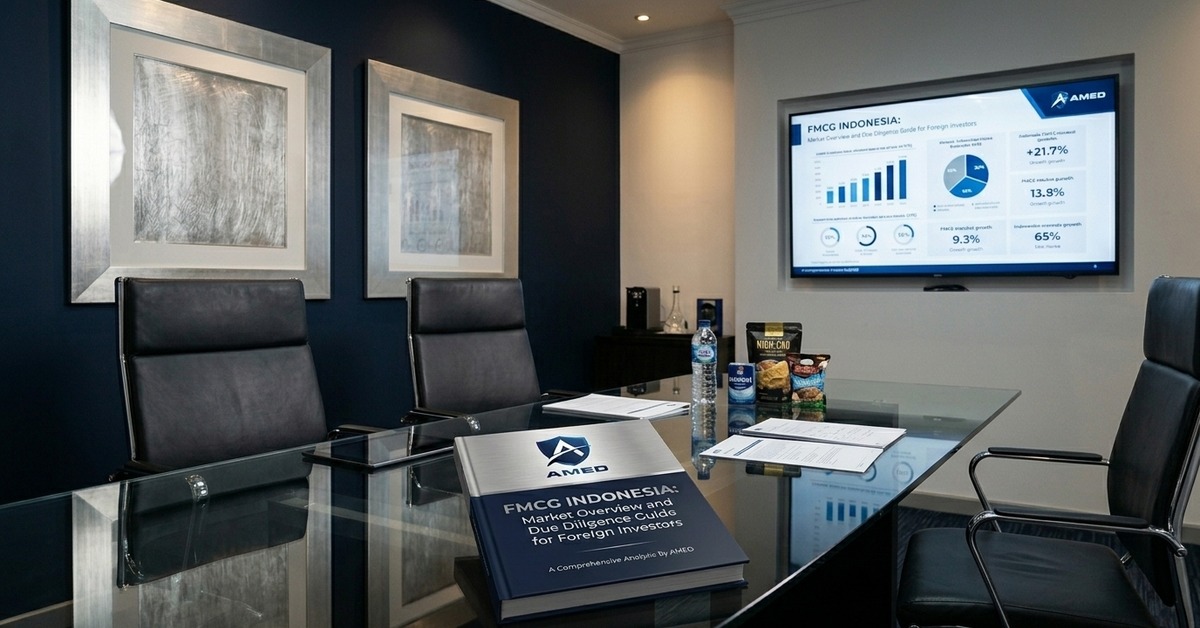
FMCG Indonesia: Market Overview and Due Diligence Guide for Foreign Investors
FMCG Indonesia due diligence is not just a regulatory checkbox—it is the foundation of a successful market entry in Southeast Asia’s largest economy. With a population exceeding 280 million, rising disposable incomes, and rapid urbanization, Indonesia offers immense opportunities for Fast-Moving Consumer Goods (FMCG) companies. However, navigating the local regulatory maze, understanding consumer behavior, and vetting potential partners require a structured approach. This guide provides foreign investors with a comprehensive market overview and a step-by-step due diligence framework to minimize risks and maximize returns.
Indonesia’s FMCG Landscape: Key Trends and Opportunities
Indonesia is the largest FMCG market in Southeast Asia, valued at over USD 150 billion and growing at a compound annual growth rate (CAGR) of 5-7%. The market is driven by a young demographic, with nearly 70% of the population under 40 years old, and increasing internet penetration that fuels e-commerce. Key segments include food and beverages, personal care, household products, and health supplements.
Foreign investors are particularly attracted to the halal-certified product segment, which is mandatory for many categories and opens doors to the broader global halal market. Additionally, the rise of modern trade (hypermarkets, supermarkets) and the dominance of traditional trade (warungs) create parallel distribution channels that require distinct strategies.
However, success in Indonesia is not guaranteed by brand recognition alone. Local competitors like Indofood, Wings Group, and Unilever Indonesia have deep distribution networks and strong consumer loyalty. Foreign entrants must conduct thorough market research and align their product positioning with local tastes and price sensitivity.
Given the complexity of the FMCG landscape, many foreign investors turn to Business Investigation services to validate market assumptions and identify hidden risks before committing capital.
Regulatory Framework for Foreign Investors in FMCG
Indonesia’s investment regulations have become more welcoming under the Omnibus Law, but certain sectors remain restricted. For FMCG, the Negative Investment List (DNI) determines foreign ownership limits. Most FMCG manufacturing activities are open to 100% foreign ownership, but distribution activities may require a partnership with a local company or the establishment of a PT PMA (foreign-owned limited liability company) with specific licenses.
Key Licenses and Permits
- Business Identification Number (NIB): The primary business license obtained through the Online Single Submission (OSS) system.
- BPOM Registration: Mandatory for food, beverages, cosmetics, and health supplements. Products must be registered with the National Agency for Drug and Food Control (BPOM) before sale.
- Halal Certification: Required for food and beverage products, personal care, and household items. The Halal Product Assurance Agency (BPJPH) oversees the process.
- Distribution License (Izin Edar): Required for imported products and locally manufactured goods.
- Import Permits (API): For companies importing raw materials or finished goods.
Foreign investors often underestimate the time and cost of obtaining these permits. Delays in BPOM registration alone can push product launches back by 6-12 months. Therefore, engaging with a Legal Administrator Shield service can streamline the bureaucratic process and ensure compliance.
Due Diligence Steps for FMCG Indonesia Market Entry
A robust due diligence process is essential to avoid costly mistakes. Here are the critical steps foreign investors should follow when conducting FMCG Indonesia due diligence.
1. Market Feasibility Study
Analyze market size, growth rates, consumer demographics, and purchasing power in target regions. Indonesia is not a single market; Java accounts for over 60% of FMCG sales, while outer islands have different consumption patterns and infrastructure challenges. A feasibility study should also assess competitor landscape, pricing dynamics, and distribution channel effectiveness.
2. Regulatory Compliance Audit
Review all applicable regulations, including product-specific requirements, labeling laws, advertising restrictions, and environmental standards. For example, sugar-sweetened beverage taxes are being considered, which could impact profit margins. Ensure that your product portfolio aligns with current and upcoming regulations.
3. Financial and Tax Assessment
Evaluate the financial health of potential partners, including their tax compliance, debt levels, and cash flow. Indonesia’s tax system can be complex, with withholding taxes, VAT, and corporate income tax rates. A financial audit helps identify hidden liabilities that could affect the joint venture or acquisition.
4. Operational Due Diligence
Assess production capabilities, supply chain reliability, and logistics infrastructure. Many FMCG companies rely on third-party manufacturers (contract manufacturing) to reduce capital expenditure. Verify the manufacturer’s certifications, quality control processes, and capacity to scale.
For a deeper dive into the overall process, refer to our comprehensive Due Diligence in Indonesia: A Complete Guide for Foreign Investors.
Common Risks and Red Flags in Indonesian FMCG
Foreign investors should be aware of the following risks that frequently emerge during FMCG Indonesia due diligence:
- Counterfeit Products: Indonesia has a significant counterfeit market, especially in personal care and household goods. Protect your brand by registering trademarks and working with enforcement agencies.
- Distributor Fraud: Unscrupulous distributors may inflate sales figures, delay payments, or sell products outside agreed territories. Background checks on distributors are crucial.
- Labor Disputes: Indonesia’s labor laws are protective of workers. Ensure that your partners comply with minimum wage, severance, and union regulations.
- Corruption and Bribery: While the government has made progress, corruption remains a risk in licensing and procurement. A transparent compliance program is essential.
- Brand Infringement: Local companies may register your brand name or trademark in bad faith. Conduct trademark searches early and register your IP in Indonesia.
Understanding these common red flags in Indonesian business can save investors from significant financial and reputational damage.
Partner Vetting and Background Checks
Choosing the right local partner is often the most critical decision for foreign FMCG investors. A partner can be a distributor, a contract manufacturer, a joint venture partner, or an acquisition target. Each requires a different level of scrutiny.
Distributor Background Checks
Verify the distributor’s financial statements, credit history, and reputation with other principals. Conduct site visits to their warehouses and retail accounts. Check for any past legal disputes or regulatory violations. A reliable distributor can accelerate market penetration, while a poor one can damage your brand.
Manufacturer Audits
If using contract manufacturing, audit the facility for Good Manufacturing Practices (GMP), Halal certification, and environmental compliance. Review their supply chain for raw material sourcing and quality control. Unexpected production halts can disrupt your entire supply chain.
Joint Venture Partner Vetting
For joint ventures, conduct comprehensive background checks on the shareholders, directors, and key management. Look for conflicts of interest, related-party transactions, and any history of litigation. A misaligned partner can lead to operational paralysis and financial losses.
Our Third-Party Risk Assessment Explained article offers a framework for evaluating potential partners systematically.
For senior executives being appointed to oversee the Indonesian operations, background checks for senior executives are equally important to ensure integrity and competence.
Conclusion: Secure Your FMCG Investment with Expert Due Diligence
Entering the FMCG market in Indonesia offers tremendous potential, but it also comes with unique regulatory, operational, and partnership risks. A systematic FMCG Indonesia due diligence process is not optional—it is a prerequisite for sustainable success. From understanding the regulatory landscape to vetting partners and identifying red flags, every step requires local expertise and rigorous analysis.
Foreign investors who invest in thorough due diligence are better positioned to avoid costly mistakes, accelerate time-to-market, and build a profitable presence in Indonesia’s vibrant FMCG sector. The right local partner, combined with a clear compliance strategy, can turn market challenges into competitive advantages.
Navigating the complexities of FMCG market entry in Indonesia requires a trusted partner with deep local knowledge. The Business Investigation team at AMED specializes in corporate intelligence, partner vetting, and risk assessment for foreign investors. We help you conduct thorough due diligence so you can enter the market with confidence. Schedule a consultation now to discuss your FMCG investment plans.
Frequently Asked Questions
What is the first step for a foreign investor entering the FMCG market in Indonesia?
The first step is to conduct a market feasibility study and regulatory compliance audit. This includes understanding the Negative Investment List, obtaining the necessary licenses (NIB, BPOM registration, Halal certification), and assessing consumer demand in target regions.
How long does it take to register an FMCG product with BPOM?
BPOM registration can take 6 to 12 months for food and beverages, and up to 18 months for cosmetics and health supplements. The timeline depends on product complexity, completeness of documentation, and any required laboratory testing.
Can a foreign company own 100% of an FMCG manufacturing company in Indonesia?
Yes, under the current Omnibus Law, most FMCG manufacturing activities are open to 100% foreign ownership. However, distribution activities may require a local partnership or the establishment of a PT PMA with specific licenses.
What are the most common red flags when vetting a local distributor?
Common red flags include inconsistent financial statements, history of late payments to principals, lack of proper warehousing, negative reputation among other suppliers, and involvement in legal disputes or regulatory violations.
Is Halal certification mandatory for all FMCG products in Indonesia?
Yes, Halal certification is mandatory for food and beverage products, personal care items, and household products that come into contact with the body. The certification process is overseen by BPJPH and must be completed before products can be sold.