
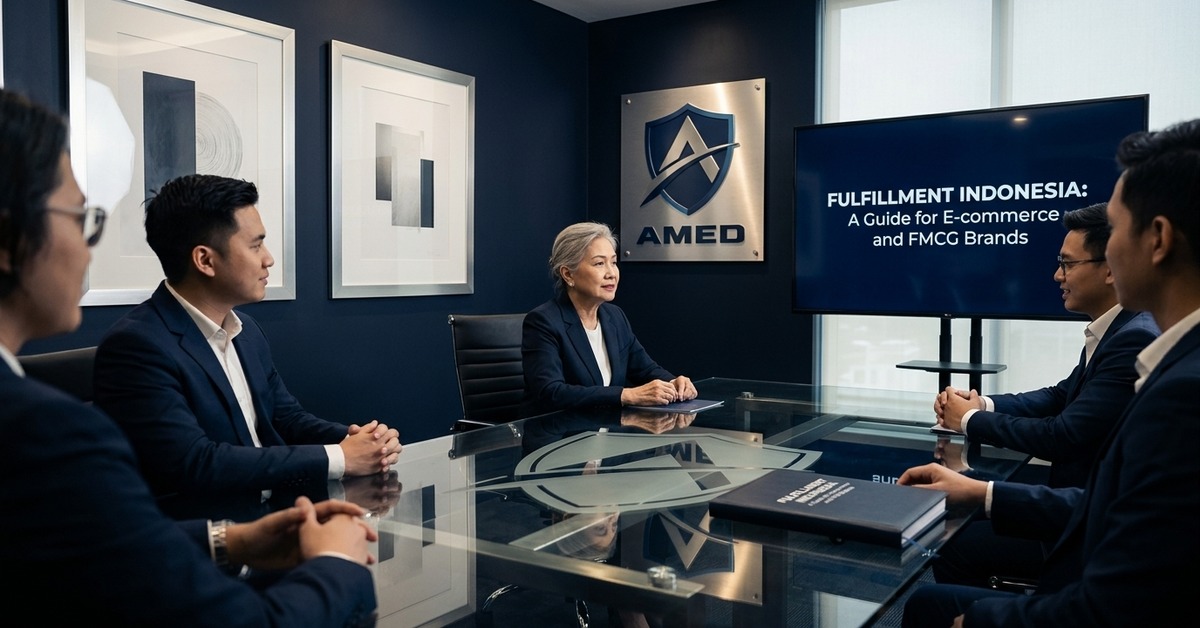
Fulfillment Indonesia is the backbone of any successful e-commerce or FMCG operation in the archipelago. With over 17,000 islands and a rapidly growing digital economy, getting your products from warehouse to customer on time is both a challenge and an opportunity. This guide provides actionable strategies for foreign brands to build a reliable fulfillment network, mitigate risks, and scale efficiently. A robust fulfillment indonesia strategy is essential for market success.
Why Fulfillment Matters in Indonesia
Indonesia’s e-commerce market is projected to reach over $130 billion by 2030, driven by a young, mobile-first population. However, the country’s geography—spanning three time zones—creates unique logistical hurdles. A single weak link in your fulfillment indonesia chain can lead to delayed deliveries, customer complaints, and lost revenue. Moreover, foreign brands often underestimate the complexity of customs clearance, local warehousing regulations, and last-mile delivery in remote areas. Therefore, selecting a capable fulfillment partner is not just an operational decision—it is a strategic one that directly impacts brand reputation and customer loyalty.
Furthermore, the rise of social commerce and live-streaming sales has compressed delivery expectations. Customers now expect same-day or next-day delivery in major cities like Jakarta, Surabaya, and Bandung. Consequently, your fulfillment strategy must be agile enough to handle spikes during Harbolnas (National Online Shopping Day) or Ramadan sales. Without a robust system, you risk stockouts or, conversely, overstocking that ties up capital.
In addition, Indonesia’s regulatory landscape is constantly evolving. New government regulations on e-commerce, data privacy, and product standards can impact how you store and distribute goods. Therefore, staying compliant requires a partner who understands local laws and can adapt quickly. For these reasons, many foreign companies choose to conduct a Business Investigation before committing to a logistics provider.
For this reason, many foreign brands rely on a thorough Business Investigation to vet potential fulfillment partners in Indonesia before signing any contract.
Key Services of a Fulfillment Provider
A comprehensive fulfillment provider in Indonesia should offer more than just storage. The following services are critical for e-commerce and FMCG brands:
- Warehousing and Inventory Management: Climate-controlled facilities for FMCG products, real-time inventory tracking via WMS, and barcode scanning.
- Order Processing and Picking: Efficient picking, packing, and labeling tailored to your SKU complexity.
- Last-Mile Delivery: Partnerships with major couriers like JNE, J&T, SiCepat, and GoSend for nationwide coverage.
- Returns Management: Reverse logistics for damaged or unsold goods, including quality inspection.
- Customs Clearance: Handling import documentation for raw materials or finished goods.
Additionally, some providers offer value-added services such as kitting, bundling, and co-packing, which are especially useful for FMCG promotional campaigns. However, not all providers are created equal. Therefore, you must verify their capabilities through site visits and reference checks. For instance, a provider might claim nationwide coverage but actually outsource to third-party couriers with inconsistent service levels.
Technology Integration
Your fulfillment partner should seamlessly integrate with your e-commerce platform (Shopify, Magento, WooCommerce) or ERP system. API connectivity ensures real-time order syncing, tracking updates, and inventory visibility. Without this, you will face manual data entry errors and delayed shipments. Consequently, prioritize providers with a proven tech stack and dedicated support team.
How to Choose the Right Partner
Selecting a fulfillment indonesia partner requires a structured evaluation. Start by mapping your specific needs: product type (e.g., perishable, fragile, high-value), order volume, delivery zones, and budget. Then, shortlist providers based on their experience with similar products and scale. For example, a provider specializing in fashion may not have the cold chain infrastructure required for FMCG food items.
Next, request case studies or client references. Ask about peak season performance, error rates, and how they handle disputes. Moreover, conduct an on-site audit of their warehouse to assess cleanliness, security, and workflow efficiency. A reputable provider will welcome such visits. On the other hand, if a provider hesitates or offers excuses, consider it a red flag.
Another critical factor is location. Warehouses near major ports (Tanjung Priok, Tanjung Perak) or airports reduce transit times for imported goods. Similarly, having multiple fulfillment centers across Java and Sumatra can improve last-mile delivery speed. However, this comes at a higher cost, so balance coverage with your budget.
Regulatory Compliance and Licensing
Operating a fulfillment center in Indonesia requires several licenses, including a Business Identification Number (NIB) through OSS, a warehouse permit (IUPP), and possibly a BPOM registration for food and cosmetic products. Foreign-owned companies (PT PMA) engaged in logistics must also comply with the Negative Investment List, which restricts foreign ownership in certain logistics sub-sectors.
Furthermore, if your fulfillment provider handles imported goods, they must have a valid API-U (Importer Identification Number) and work with a licensed customs broker. Non-compliance can lead to fines, shipment delays, or even confiscation of goods. Therefore, it is essential to verify that your partner holds all necessary permits and renews them on time.
For brands in the FMCG sector, BPOM registration is mandatory for food, beverages, cosmetics, and health supplements. Your fulfillment partner must store and handle these products according to BPOM’s Good Distribution Practices (CDOB). Failure to comply can result in product recalls and reputational damage. Consequently, many foreign investors seek Legal Administrator Shield services to navigate these regulatory complexities.
Due Diligence Before Signing a Contract
Before finalizing any partnership, conduct thorough due diligence on your potential fulfillment provider. This process should include:
- Financial Health: Review their financial statements to ensure they are not at risk of bankruptcy.
- Legal History: Check for past lawsuits, regulatory fines, or labor disputes.
- Operational Capability: Verify their warehouse capacity, technology infrastructure, and staff training programs.
- Insurance Coverage: Confirm they have adequate insurance for inventory loss, damage, and liability.
In addition, consider hiring a third-party investigator to perform background checks on the company’s directors and key shareholders. This is especially important if the provider is a relatively new player. For example, a corporate investigation service can uncover hidden risks such as undisclosed debts or links to politically exposed persons (PEPs). Such insights can save you from costly partnership failures.
Moreover, assess their disaster recovery and business continuity plans. Indonesia is prone to natural disasters like earthquakes and floods, which can disrupt warehouse operations. Ensure your partner has backup power, redundant data storage, and alternative delivery routes. Consequently, a resilient supply chain is a competitive advantage.
Operational Best Practices
Once you have selected a partner, implement these best practices to optimize your fulfillment indonesia operations:
- Standardize Packaging: Use packaging that minimizes damage and reduces shipping costs. For FMCG, consider lightweight, eco-friendly materials.
- Automate Data Exchange: Set up API integration to sync orders, inventory, and tracking in real time.
- Monitor KPIs: Track on-time delivery rate, order accuracy, and inventory turnover. Schedule monthly reviews with your provider.
- Plan for Peaks: Forecast demand for holiday seasons and communicate volume projections at least two months in advance.
Additionally, invest in a robust returns management process. Indonesia’s e-commerce return rates can be high due to size mismatches or product dissatisfaction. A clear returns policy and efficient reverse logistics will enhance customer trust. For instance, providing prepaid return labels and a 7-day return window is standard practice among top brands.
Furthermore, consider using a multi-warehouse strategy to reduce delivery times. By storing inventory closer to customers in Jakarta, Surabaya, and Makassar, you can offer same-day delivery in urban areas. However, this requires sophisticated inventory allocation to avoid stockouts. Therefore, work closely with your fulfillment partner to optimize stock levels across locations.
Finally, stay updated on regulatory changes that affect logistics. For example, the government’s recent push for digitalization of customs procedures (CEISA 4.0) aims to speed up clearance times. Adapting quickly to such changes can give you an edge over competitors. For ongoing compliance support, many foreign firms engage Business Consultation services to stay ahead of the curve.
Real-World Case Studies
Understanding how other businesses have navigated fulfillment indonesia can provide valuable insights. Below are two anonymized examples based on common scenarios encountered by foreign brands.
Case Study 1: European FMCG Brand Entering Jakarta
A European FMCG company wanted to launch a line of organic snacks in Indonesia. They initially partnered with a small logistics provider recommended by a local contact. However, within three months, they faced repeated stockouts and delayed deliveries during Ramadan. After conducting a business investigation, they discovered the provider lacked cold storage and had overcommitted on capacity. They switched to a larger provider with multiple warehouses and BPOM-certified facilities. As a result, on-time delivery improved from 65% to 94% within two months. The key lesson: verify operational capacity before signing.
Case Study 2: US E-commerce Brand Scaling for Harbolnas
A US-based fashion brand used a single warehouse in Tangerang for all orders. During Harbolnas, order volume surged 400%, causing system crashes and a backlog of 3,000 orders. They had not planned for peak season and lacked API integration with their e-commerce platform. After the event, they implemented a multi-warehouse strategy and automated order syncing. They also partnered with three last-mile couriers instead of one. Subsequently, their next peak season saw a 98% on-time delivery rate. The takeaway: plan for peaks and diversify logistics partners.
Case Study 3: Australian Health Supplement Brand
An Australian company selling health supplements needed a partner who could handle BPOM compliance and cold chain storage. They shortlisted three providers and conducted site visits. One provider failed the audit due to poor temperature control logs. The second provider lacked proper API-U licensing. The third provider, however, passed all checks and had a dedicated customs broker. Consequently, the brand launched successfully and achieved 99% order accuracy in the first quarter. This case underscores the importance of regulatory due diligence.
Common Mistakes to Avoid
Many foreign brands stumble when setting up fulfillment indonesia. Here are frequent pitfalls and how to avoid them:
- Ignoring Local Regulations: Assuming that international standards apply. Always verify BPOM, API-U, and warehouse permits. Use a legal shield service to stay compliant.
- Choosing Based on Price Alone: The cheapest provider often cuts corners on technology or insurance. Balance cost with reliability and service quality.
- Skipping Site Visits: Relying solely on brochures or websites. Conduct physical audits to assess warehouse conditions and staff competence.
- Underestimating Last-Mile Complexity: Assuming one courier covers all islands. Use multiple couriers and consider local partners for remote areas.
- Neglecting Disaster Planning: Not having backup warehouses or alternative routes. Indonesia’s geography demands resilience; invest in business continuity plans.
Avoiding these mistakes can save significant time and money. For instance, a brand that skipped regulatory checks faced a three-month customs hold on imported goods, costing thousands in storage fees. Therefore, due diligence is not optional—it is essential.
Advanced Fulfillment Indonesia Strategies
To truly excel in fulfillment indonesia, brands must adopt advanced strategies that go beyond basic logistics. Firstly, consider implementing a demand forecasting system powered by machine learning. This technology analyzes historical sales data, seasonal trends, and market conditions to predict inventory needs accurately. Consequently, you can reduce both stockouts and excess inventory, thereby lowering carrying costs.
Secondly, explore the benefits of cross-docking. In this method, incoming goods are directly transferred to outbound trucks without storage. This reduces handling time and speeds up delivery for high-turnover items. However, cross-docking requires precise coordination with suppliers and carriers. Therefore, it works best for established supply chains.
Thirdly, leverage data analytics to optimize your fulfillment indonesia network. By analyzing delivery performance across different regions, you can identify bottlenecks and adjust warehouse locations accordingly. For example, if deliveries to eastern Indonesia are consistently late, consider opening a small hub in Makassar. Such data-driven decisions improve customer satisfaction and reduce costs.
Furthermore, invest in sustainable practices. Indonesian consumers increasingly prefer eco-friendly brands. Use biodegradable packaging, optimize delivery routes to reduce fuel consumption, and partner with carbon-neutral couriers. These actions not only help the environment but also enhance your brand image. Consequently, sustainability becomes a competitive differentiator.
Additionally, consider offering subscription-based fulfillment models for repeat customers. Many e-commerce brands now provide monthly subscription boxes for FMCG products like coffee, snacks, or toiletries. This model stabilizes demand and improves inventory planning. However, it requires a flexible fulfillment partner capable of handling recurring orders and personalized packaging.
Finally, stay informed about emerging technologies like drone delivery and autonomous vehicles. While still experimental in Indonesia, these innovations could revolutionize last-mile delivery in remote areas. Early adopters may gain a significant advantage. Therefore, keep an eye on pilot projects and regulatory developments in this space.
Fulfillment Indonesia for Different Product Types
Different products require tailored fulfillment strategies. For perishable FMCG items like fresh food or dairy, cold chain logistics is non-negotiable. Ensure your fulfillment indonesia partner has temperature-controlled warehouses and refrigerated trucks. Moreover, monitor temperature logs continuously to prevent spoilage. For fragile items like electronics or glassware, use cushioning materials and sturdy boxes. Additionally, clearly label packages as fragile to ensure careful handling.
For high-value items like luxury goods or jewelry, security is paramount. Choose a fulfillment provider with 24/7 surveillance, access control, and insurance coverage. Furthermore, require signature upon delivery to prevent theft. For hazardous materials like chemicals or batteries, comply with special storage and transportation regulations. Your partner must have the necessary permits and training to handle such goods safely.
For oversized items like furniture or appliances, consider using a white-glove delivery service. This includes installation and assembly at the customer’s location. Many fulfillment indonesia providers offer this premium service for an additional fee. Consequently, it enhances customer experience and reduces return rates. For small, lightweight items like cosmetics or supplements, focus on efficient picking and packing to maximize throughput. Automation can significantly speed up these processes.
Frequently Asked Questions
What is fulfillment Indonesia?
Fulfillment Indonesia refers to the process of storing, picking, packing, and shipping products to customers within the Indonesian archipelago. It encompasses warehousing, order processing, last-mile delivery, and returns management, often outsourced to third-party logistics providers. For a deeper understanding, you can explore the Wikipedia page on order fulfillment.
How do I choose a fulfillment provider in Indonesia?
Evaluate providers based on their experience with your product type, warehouse locations, technology integration, regulatory compliance, and financial stability. Conduct site visits and request client references. For high-value partnerships, consider third-party due diligence to verify their background.
What licenses are required for fulfillment operations in Indonesia?
Key licenses include a Business Identification Number (NIB), warehouse permit (IUPP), and for imported goods, an Importer Identification Number (API-U). FMCG products may require BPOM registration and CDOB certification for distribution. Foreign-owned logistics companies must comply with the Negative Investment List.
Can foreign companies own a fulfillment center in Indonesia?
Yes, but foreign ownership in the logistics sector is restricted under the Negative Investment List. A PT PMA can own up to 67% of a warehouse and logistics company, depending on the sub-sector. It is advisable to consult with a legal expert to structure the investment correctly.
What are the biggest risks in Indonesian fulfillment?
Common risks include regulatory non-compliance, unreliable last-mile delivery in remote areas, natural disasters disrupting operations, and fraud from unscrupulous providers. Mitigate these by conducting thorough due diligence, securing insurance, and maintaining backup logistics partners.
How can I reduce shipping costs in Indonesia?
Optimize packaging weight and dimensions, negotiate volume discounts with multiple couriers, use regional warehouses to shorten delivery distances, and consolidate orders where possible. Additionally, consider using economy shipping for non-urgent orders.
What is the average delivery time in Indonesia?
In major cities like Jakarta, Surabaya, and Bandung, same-day or next-day delivery is common. For remote areas in eastern Indonesia, delivery can take 5–10 days. Working with a provider that has a strong network in less accessible regions is crucial for national coverage. For more context on logistics networks, refer to third-party logistics best practices.
How does inventory management affect fulfillment Indonesia success?
Effective inventory management ensures you have the right stock at the right location. It reduces holding costs and prevents stockouts. Many providers use Warehouse Management Systems (WMS) to track inventory in real time. This is a key component of modern supply chain management.
What is the role of technology in fulfillment Indonesia?
Technology enables real-time tracking, automated order processing, and data analytics. It improves accuracy, speed, and transparency. Therefore, choose a partner with a robust tech platform that integrates with your systems. This is especially important for scaling operations.
How do I handle returns in Indonesia?
Establish a clear returns policy and work with your fulfillment partner to set up a reverse logistics process. Inspect returned items for damage, restock sellable products, and dispose of unsellable ones. A smooth returns process builds customer trust and loyalty.
Navigating fulfillment indonesia requires a trusted partner who understands both the logistical and regulatory landscape. The Business Investigation team at AMED is ready to help you vet potential providers and ensure your supply chain is secure. Schedule a consultation now to protect your investment and scale with confidence.