
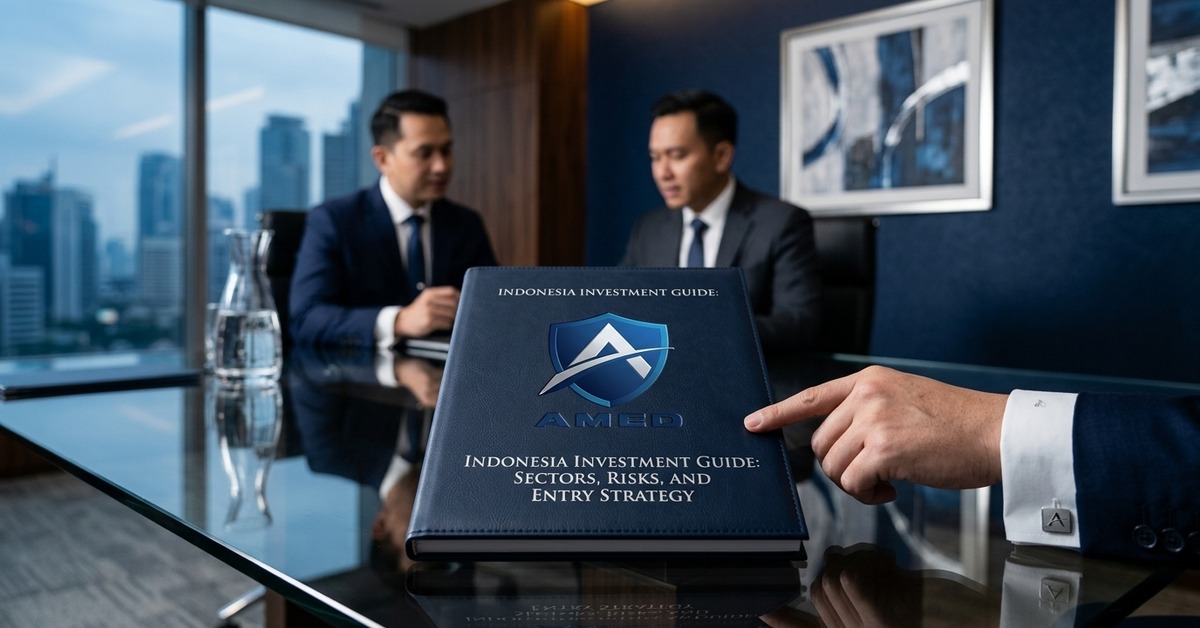
Invest in Indonesia offers one of the most compelling opportunities in Southeast Asia, yet many foreign investors stumble due to regulatory complexity, cultural barriers, and hidden operational risks. This guide unpacks the priority sectors, common pitfalls, and a step-by-step entry strategy to help you navigate the Indonesian market with confidence.
Why Invest in Indonesia Today
Indonesia, the world’s fourth most populous nation, boasts a rapidly growing middle class, abundant natural resources, and a government actively courting foreign capital. The country’s GDP has consistently grown above 5% annually pre-pandemic, and post-COVID recovery has been robust. For any global investor looking to diversify into emerging markets, to invest in Indonesia is a strategic move that offers long-term upside potential.
Furthermore, the Indonesian government has introduced sweeping reforms under the Omnibus Law (Job Creation Law) to streamline business licensing and open up previously restricted sectors. This has significantly lowered the barrier for foreign ownership in industries such as logistics, construction, and renewable energy. As a result, foreign direct investment (FDI) inflows have surged, with Singapore, China, and Japan leading the charge.
However, the promise of high returns comes with a unique set of challenges. Bureaucracy at the regional level, inconsistent enforcement of regulations, and a complex tax system can quickly erode margins if not managed properly. Therefore, a well-researched entry strategy is not just advisable—it is essential for survival and success.
Priority Sectors to Invest in Indonesia
Not all sectors are equally open or profitable for foreign investors. The Indonesian government has published a Priority List (Presidential Regulation No. 10 of 2026) that identifies sectors with tax incentives, simplified licensing, and eased foreign ownership caps. Understanding this list is the first step when you plan to invest in Indonesia.
1. Renewable Energy and Green Economy
Indonesia has set ambitious targets to achieve net-zero emissions by 2060. This has opened massive opportunities in solar, hydro, geothermal, and biomass energy. Foreign investors can own up to 100% of renewable energy projects, and the government offers tax holidays and import duty exemptions. However, navigating land acquisition permits and local content requirements (TKDN) requires expert guidance.
2. Digital Economy and E-Commerce
With over 200 million internet users, Indonesia’s digital economy is projected to reach USD 130 billion by 2026. Sectors like fintech, healthtech, and e-commerce remain highly attractive. Foreign ownership is generally permitted up to 100% for most digital platforms, though licensing through the OSS (Online Single Submission (OSS)) system can be cumbersome. Investors must also comply with data localization laws under the Personal Data Protection Law (UU PDP).
3. Manufacturing and Supply Chain
Indonesia is positioning itself as a global manufacturing hub, especially for electric vehicle (EV) batteries, electronics, and textiles. The government offers tax allowances and exemptions for companies that set up production facilities in special economic zones (SEZs). However, the Negative Investment List (DNI) still restricts foreign ownership in certain manufacturing sub-sectors, so due diligence is critical.
4. Infrastructure and Construction
The National Strategic Projects (PSN) program includes toll roads, ports, airports, and railways. Foreign investors can participate through public-private partnerships (PPPs) or direct investment. While the capital requirements are high, the long-term returns are stable. Nevertheless, land acquisition disputes and regulatory delays are common risks.
5. Healthcare and Pharmaceuticals
The pandemic exposed gaps in Indonesia’s healthcare infrastructure, prompting the government to open the sector to foreign investment. Hospitals, medical devices, and pharmaceutical manufacturing are now accessible, with foreign ownership up to 67% in some sub-sectors. However, compliance with BPOM (Food and Drug Authority) regulations is stringent and time-consuming.
Given the complexity of sector-specific regulations, many foreign investors choose to engage a Business Consultation service to map out the most viable entry path before committing capital.
Key Risks When You Invest in Indonesia
While the opportunities are vast, the risks are equally real. A successful investor does not ignore these challenges but instead builds mitigation strategies around them. Here are the most critical risks to consider when you decide to invest in Indonesia.
Regulatory Volatility: A Key Risk When Investing in Indonesia
Indonesian regulations can change rapidly, often with minimal notice. For instance, the sudden closure of the coal export ban in early 2026 disrupted supply chains worldwide. Foreign investors must stay agile and maintain close relationships with local legal advisors. A Business Investigation can uncover pending regulatory changes before they impact your operations.
Corruption Risk When You Invest in Indonesia
Despite reform efforts, corruption remains a concern, especially at the regional level. Bribery, nepotism, and opaque licensing processes can delay projects by months. The government’s push for digital licensing via OSS has improved transparency, but physical interactions with local officials are still necessary for certain permits.
Infrastructure Gaps: A Hidden Challenge to Invest in Indonesia
Outside Java, infrastructure is often inadequate. Poor road conditions, unreliable electricity, and limited logistics networks can increase operational costs. Investors should conduct thorough site visits and feasibility studies before choosing a location.
Cultural and Language Barriers When You Invest in Indonesia
Business culture in Indonesia emphasizes relationships (gotong royong) and hierarchy. A direct, confrontational approach often fails. Foreign executives must invest time in building trust with local partners and employees. Misunderstandings can lead to contract disputes or employee turnover.
Supply Chain Disruptions When You Invest in Indonesia
Indonesia is an archipelago of over 17,000 islands, making logistics complex. Natural disasters, port congestion, and raw material shortages are recurring issues. Diversifying suppliers and maintaining buffer stock are prudent strategies.
Step-by-Step Entry Strategy to Invest in Indonesia
To minimize risks and maximize returns, follow this structured entry strategy when you plan to invest in Indonesia.
Step 1: Conduct Thorough Market Research
Understand the competitive landscape, consumer behavior, and demand trends in your target sector. Use secondary data from sources like the Indonesian Central Bureau of Statistics (BPS) and industry reports. Additionally, consider commissioning a Business Investigation to verify the reputation and financial health of potential partners.
Step 2: Choose the Right Legal Entity to Invest in Indonesia
Most foreign investors establish a PT PMA (Perseroan Terbatas Penanaman Modal Asing), a limited liability company for foreign investment. The minimum paid-up capital is IDR 10 billion (approximately USD 650,000), though some sectors have higher requirements. The process involves obtaining a NIB (Business Identification Number) through OSS, followed by sector-specific licenses.
Step 3: Secure Permits and Licenses
The licensing process can be daunting. Key permits include the NIB, location permit, environmental permit (AMDAL or UKL-UPL), and operational licenses from relevant ministries. Engaging a Legal Administrator Shield service ensures that all paperwork is filed correctly and on time. For a complete list of required permits, visit the BKPM official website.
Step 4: Build Local Partnerships
While many sectors now allow 100% foreign ownership, having a local partner can still accelerate market entry. Partners help navigate cultural nuances, government relations, and distribution networks. However, choose partners carefully—conduct background checks and draft clear shareholder agreements.
Step 5: Establish Operational Infrastructure
Set up your physical office or production facility. For executives relocating to Indonesia, personal security should be a priority. Services like Executive Protection provide safe transportation and security for expatriate staff, especially in high-risk areas.
Step 6: Implement Risk Management Systems
Develop a risk register covering regulatory, operational, financial, and reputational risks. Regularly review and update it. Consider purchasing political risk insurance and maintaining a legal retainer with a local law firm.
Legal Compliance & Licensing to Invest in Indonesia
Compliance is not a one-time event but an ongoing obligation. Foreign companies must file annual reports, pay taxes (corporate income tax rate 22%), and comply with labor laws (e.g., severance pay, BPJS Ketenagakerjaan contributions). Failure to comply can result in fines, license revocation, or even criminal charges.
The OSS system has simplified initial licensing, but post-establishment compliance remains fragmented. For example, companies must renew their business licenses every year through OSS-RBA (Risk-Based Approach). Additionally, sector-specific regulations—such as halal certification for food companies or mining permits for extractive industries—require specialized knowledge.
To stay compliant, many foreign investors outsource their administrative and legal management to a dedicated Legal Administrator Shield service. This ensures that deadlines are met, documents are properly stored, and regulatory changes are monitored.
Frequently Asked Questions
What is the minimum capital required to invest in Indonesia?
The minimum paid-up capital for a PT PMA is IDR 10 billion (approximately USD 650,000). However, certain sectors may require higher capital based on specific regulations.
Can a foreigner own 100% of a company in Indonesia?
Yes, many sectors now allow 100% foreign ownership under the Positive Investment List. However, some sectors remain restricted or partially closed to foreign investment.
How long does it take to set up a PT PMA in Indonesia?
On average, the process takes 2 to 4 months, depending on the sector and completeness of documents. Engaging a professional service can expedite the timeline.
Is it mandatory to have a local partner?
Not for most sectors, but having a local partner can facilitate market entry. Some sectors (e.g., certain construction services) still require a local partner.
What are the main taxes for foreign-owned companies?
Corporate income tax is 22%, VAT is 11% (rising to 12% by 2026), and withholding taxes apply to dividends, interest, and royalties. Tax incentives are available for priority sectors.
Successfully navigating Indonesia’s investment landscape requires more than just capital—it demands local expertise and proactive risk management. The Business Consultation team at AMED is ready to guide you through every step, from market research to operational setup. Schedule a consultation now and turn your investment plan into a profitable reality.